

AI’s Impact on the World

Written by: Faye Holliman (‘29) & Abigail Penna (‘29)
By this point everyone has had the chance to use AI or knows someone who does. It's a pretty common practice that has integrated its way into society. Everyone says it's inevitable, and that it's the technology of the future, right? But what's less talked about is the impact it has on not just our minds, but our world. How can AI be the technology of the future when it's actively destroying the resources that humans need to survive?
Along with the rising popularity of AI, more and more data centers are being built in order to support the high demand of usage. AI data centers are specialized facilities that contain the specific equipment to train, deploy, and deliver AI services. These data centers are reshaping communities around the country, impacting water and local communities. In order to maintain the proper conditions, intense cooling is required to combat the heat produced by the servers using vast amounts of electricity. These data centers rely on several kinds of technology, one of which is evaporative cooling, requiring significant amounts of water. As artificial intelligence utilizes larger and more complex chips, the demand for power increases and the data centers continue to grow in size. With the increase in electrical input and power, comes a requirement for more cooling in order to avoid overheating. According to Red Canary magazine, the water demand of close to 60 centers in Phoenix is about 177 million gallons per day. A medium-sized data center can consume up to 110 million gallons of water per year, which equates to the annual water usage of approximately 1,000 households. Additionally, the millions of microchips processing the information have already used thousands of gallons of water, which is enough water for 33,000 US households, according to the World Economic Forum. Bloomberg News discovered that around ⅔ of new data centers are being constructed in places that are already experiencing intense water stress. A resident in Mansfield, Georgia reported to BBC that “I can’t live in my home [...] I can’t drink the water.” She believes this is because of the major data center, just 400 yards from her home. Gordon Rogers is the executive director of Flint Riverkeeper, a non-profit group in charge of monitoring Georgia’s Flint River. When he took a BBC reporter down to a creek nearby a new construction site for a data center, they discovered that the water was brown and cloudy. He explained that this is caused by sediment runoff and flocculants. These are chemicals used in construction to bind soil and prevent erosion, however, when they seep into water systems, they create sludge.
Unfortunately, water isn’t the only thing AI is rapidly consuming, the mass amounts of electricity required to power the data centers is astronomical. In 2024, AI used around 4.4% of America’s electricity, and the number is expected to triple by 2028 according to Penn State’s Institute of Energy and the Environment. Data centers run on high electricity for months at a time, equivalent to around 1.3 million houses a month. Not only are these high electricity use rates affecting households around America, they rely on fossil fuels for their power, contributing to greenhouse gas emissions. With the amount of electricity used, electricity bills have risen by 25% in the past decade according to Carnegie Mellon University. Many places have had to upgrade their power grids to keep up with high demand from the data centers. Sadly, the households and small businesses are paying the price for AI data centers, while governments face pressure to prevent blackouts or price hikes. Data centers are really a lose-lose situation.
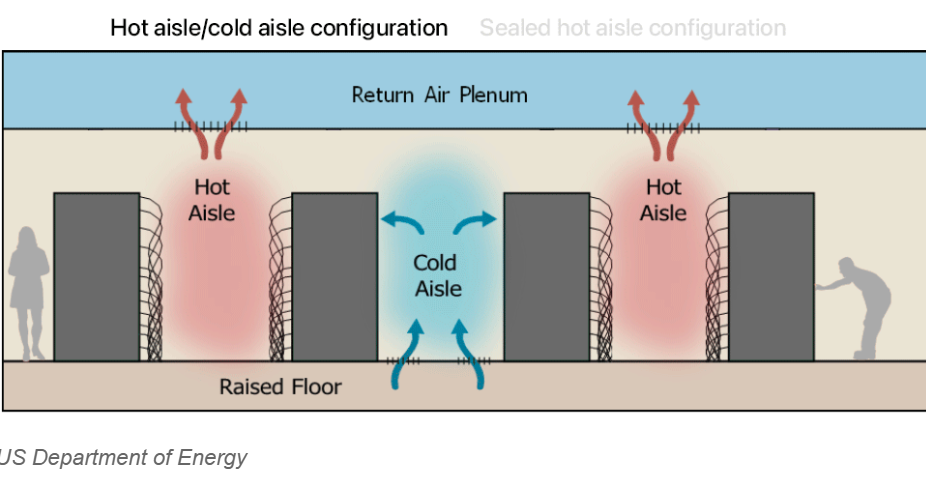
The most commonly known problem with America’s data centers is they are using fresh, drinkable water to cool even the smallest of data centers. There are alternative solutions that many places are starting to utilize. The first is a system called closed-loop cooling, putting both fresh and waste water in a loop to cool data centers multiple times. This preserves about 70% more fresh water on average. Another, less helpful solution is called air-cooling. This system is used in areas where it is cheaper to cool data centers with air than it is to do with water, basically a big AC machine for the whole data center. Currently most AI also uses fossil fuels to power the warehouses, while it doesn’t stop the water issue, renewable sources can lower their environmental footprint. Solar and wind power don’t require any water for cooling, so they are the optimal solution for data centers.
Ultimately, AI’s effect on our planet is undeniable and it is critical to the future of our planet that we are mindful and make careful decisions in order to ensure that we keep our communities safe.
Sources:


Comments